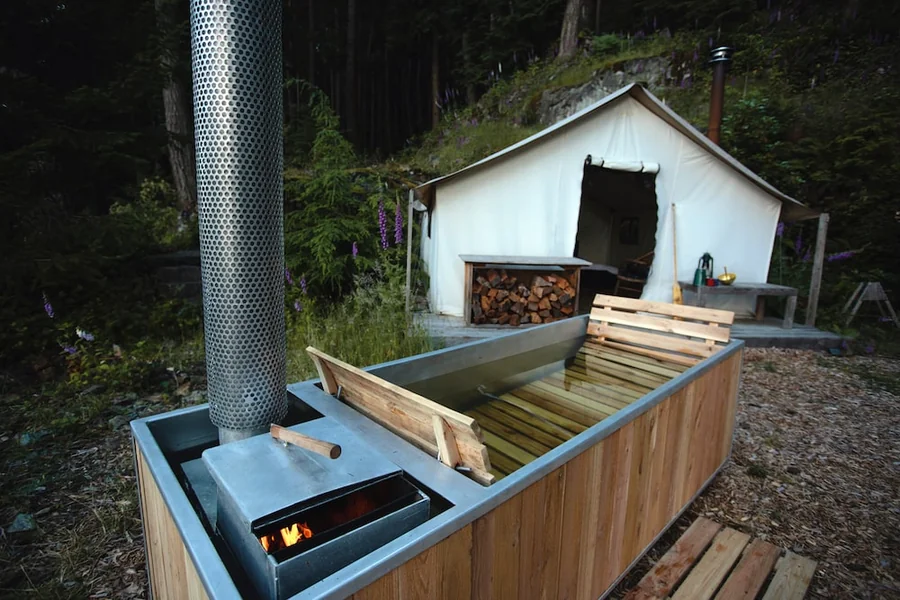
A wood-fired hot tub is heated by burning wood in a stove where the fire heats the water in the tub through metal walls. Heat rises as warm water and sinks as cool water, which allows natural convection of heat. In general, a tub with a capacity of 1,000 to 1,500 litres is brought up to 38 degrees, which is a comfortable temperature, in about two to four hours, starting from cold tap water. An insulated lid that fits the tub well will keep it warm for several hours after the fire has burnt out. There are mainly two things that control the entire process: the stove design and the heat-trapping mechanism you use once the heat is generated.
All the rest depends on these fundamentals. While the stove is the one deciding how quickly you get heated, convection determines the heating uniformity, and insulation influences the duration for which the warmth stays before you have to light the fire again. Recognizing how the three components interact is what makes the difference between the irritated two-hour wait and the comfortable, anticipated soak you can schedule for your evening.
Table of Contents
ToggleHow does the stove heat the water?
The stove is the engine; two main stove configurations exist. Internal stoves are built inside the tub with the firebox submerged so that a lot of the fire’s heat is transferred through the surface of the water, which makes them faster of the two. With an external stove that is mounted to the side of the tub, heating water is done by water being drawn from the bottom and being returned near the top after the heating process, which means the heat-up is slowed a bit, but the flames are kept away from the bathing space.
It is the metal of the firebox that gets the job done. Most of the stoves are constructed from marine-grade aluminium or stainless steel as both of these metals are great conductors of heat and are able to resist corrosion from frequent immersion. Aluminium, due to its high thermal conductivity, heats up quicker than stainless steel but stainless steel, being more robust, can even tolerate occasions when you ‘run the fire hot’, This way material choice affects not only your heating time but also the stove’s lifespan.
The burn rate is controlled by airflow. A stove, which has a proper air intake and a long flue, pulls strongly, burning the logs hotter and faster, and So, opening the vents fully right away will take you to temperature faster. When you are nearing the target, reducing the airflow will slow down the burn such that you will not overshoot the temperature, and this is the most useful single behavior that a new owner learns.
Why does convection matter, and should you stir the water?
Convection is responsible for moving the heat gradually through the hot tub without any pumping force. When the stove heats the water in contact with it, that water heats up, extends its volume, loses density, and goes up whereas the cooler and denser water will fall to the bottom to replace that which has risen, So creating a gentle flow current of water. This is the same mechanism used by a kettle or a radiator, and with a hot tub, it starts a heat distribution process of the water from the stove to the rest of the tub.
Yet, the problem with convection only is that it is quite slow and the temperature distribution is uneven. When convection is the only heating system, the water near the stove and the surface layer gets A lot hotter than the water at the far end and the bottom. Sometimes, the difference can be even several degrees. This explains why the act of stirring has an effect, and most user decide to give the tub a good stir with the help of a paddle every twenty to thirty minutes during a heat-up session to level out the temperature and prevent hot patches near the stove beside cold pockets elsewhere.
Some designs rely on mechanical improvement of the circulation. External stoves, for example, bring about better water flow naturally, due to the vertical distance between the cool intake and the warm return, and some models even come with a tiny circulation pump that runs on 12-volt or main power to keep the water moving without the need for manual stirring. For those who are not keen on the idea of paddling, an external stove or an assisted-circulation model will be more suitable to the way you will really use it.
How long does it take to heat, and what slows it down?
The reality is that the time needed will be longer than what is mentioned in the brochures. A small two-person hot tub of 800 litres can be heated from cold to hot in 90 minutes to two hours, but a big tub of about 1,500 litres or more can even take three to four hours without anyone telling your family! In fact, a very cold winter day could easily add an hour or even more to that time. Mainly it depends on the temperature of the water you put in because heating water at a bare 5-degree temperature from a cold tap in winter will take much more time than a tub that is already partly warm.
Besides, heating will be affected by the wind, air temperature, and whether the tub is covered or not. While a tub without a cover is constantly losing heat through its surface even while the fire is burning, this also explains why heating the tub with the lid fitted and only the gap left for the safe operation of the stove can really reduce the heating time. Also, logs that are still wet or unseasoned are another hidden problem as they will combust at a lower temperature and more of the energy will be spent on evaporation of water from the wood rather than on heating your water.
Basically, how fast the heating progresses depends on the quality and quantity of fuel. For heating up an empty tub, one usually burns 15 to 30 kilograms of dry hardwood logs and well-seasoned wood with less than 20 percent moisture is preferable as it burns hotter and cleaner compared to the damp softwood. If it seems like your heating-up process is extremely slow then most likely the problem is with the supply of air and moisture content in the logs rather than the condition of your tub.
What keeps the water warm once it is hot?
Insulation is the real unsung hero of the whole system. A well-fitting insulated lid is actually the most significant single factor, given that almost all heat loss is from the open water surface, and by covering it, one can keep the temperature at a soaking level even 6-12 hours after the fire has gone out. Without a lid, the same tub can lose several degrees an hour on a very cold night, so a finished soak may just turn into a quick one.
Also, the tub material and wall insulation play a role. If softwood is laid bare, for instance, it loses heat more quickly than one with an insulated jacket or double-walled construction. Besides that, those made mainly for cold climates usually feature foam insulation or a thermowood shell plus adding the slow heat loss. Here, build quality really merits its value over the season, as a well-insulated tub allows you to heat once and have several sessions of enjoyment, whereas a cheaper one cools so fast that you are constantly relighting it.
The way you use the fire affects retention as well. Many owners keep a small fire ticking over during a long soak to hold the temperature rather than letting it die and topping up later, which uses less wood overall than reheating cooled water. When you are comparing models and thinking about insulation, lid quality, and stove type together, browsing a specialist range of hot tubs and sauna options built for the British climate gives a clearer sense of which features actually hold heat through a damp winter rather than just on a mild test day.
How does heating differ across tub types and seasons?
Your tub shape totally changes the heating cycle. A small two-person tub will heat up quickly and also cool down quickly, which is great for spontaneous soaks, whereas a large family tub taking time to heat up is more of a leisurely affair after a good fire has been started the previous day. Fibreglass-lined tubs are also slightly different from timber ones, lacking finish and exhibiting heat-retaining and transfer properties in their own ways, so two tubs of the same volume can still feel quite different to operate.
The other significant factor is the season and it is even more of an issue in Britain than in drier climates. During summer, hotter tap water and less cold air result in quicker heat-up and less heat loss, so getting warm in a couple of hours and staying warm is no problem. Though, in severe winter, cold ground, cold water, and wind all work against you, which is the very time when a good lid, dry wood, and proper insulation become not just nice additions but the difference between a hot tub you can use and a cold tub.
After your first winter with a tub, it is wise to spend some time understanding the tub’s temperature rise pattern, the hottest spots, cool places, and heat retention time after putting off the fire. Knowing those three figures for your tub will allow you no longer to guess but accurately time the fire for the evening you want, that is when a wood-fired hot tub changes from a project to a pleasure.